
Specialty · Material handling & distribution
Conveyor Fire Sprinkler Protection
Conveyors, sortation lines and pick platforms block the ceiling sprinklers a warehouse depends on. We engineer and install the protection that goes underneath them, P.E.-designed and coordinated with your existing system, your water supply and your operations schedule.
- NFPA 13
- ESFR · CMSA
- P.E. stamped
- NFPA 25
The problem in one picture
What a conveyor does to the sprinklers above it
Both drawings show the same building in section, looking down the length of the conveyor. The only difference is the piping under the belt.
On site
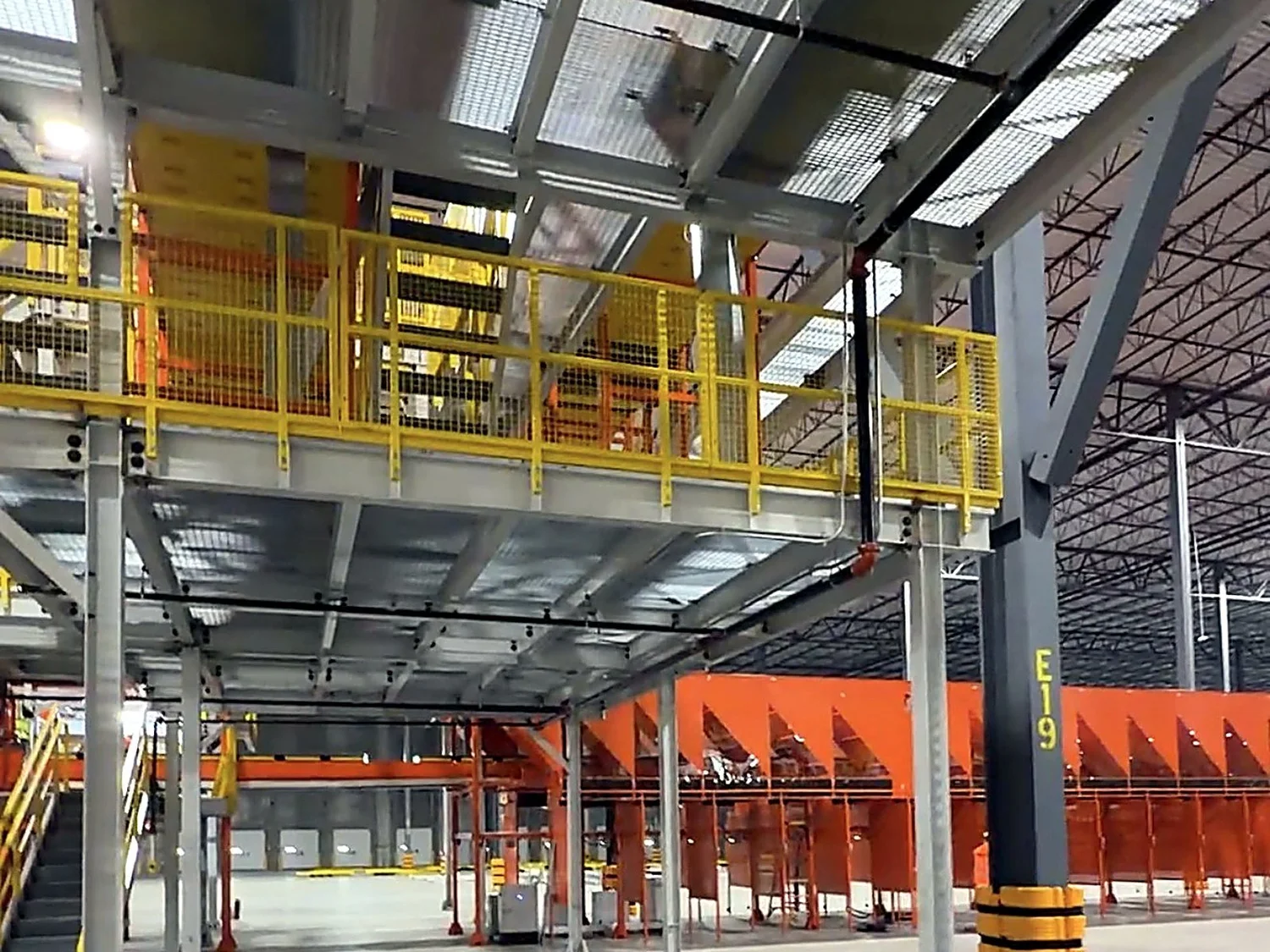
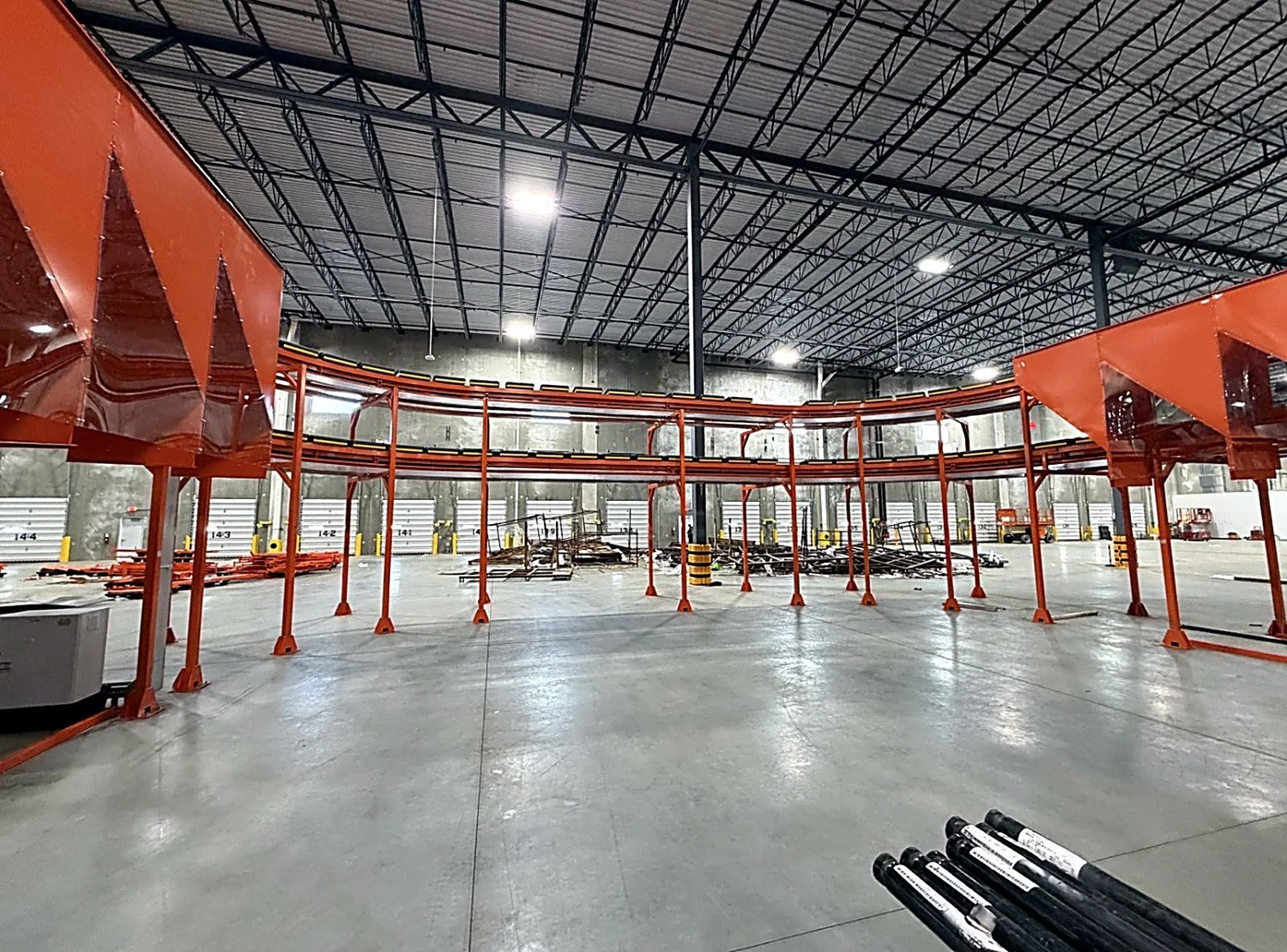
What the work looks like
Why it matters
Why conveyor lines are a sprinkler problem
A building can have a perfectly designed ceiling system and still leave large areas unprotected once the material-handling equipment goes in. These are the conditions we design around.
They block the ceiling spray
NFPA 13 requires sprinklers beneath fixed obstructions wider than 4 ft. Under ESFR ceiling systems the obstruction limits are far tighter, so even narrower conveyors can need protection below.
They carry the fire
Belts, plastic rollers, cartons and packaging moving through the building make conveyor lines a continuous, combustible path from one area to the next.
They stack vertically
Multi-level platforms, spirals and pick modules create floors within the floor. Solid and open-grate decks are treated differently, and each level needs its own analysis.
They pass through walls
Where a conveyor pierces a fire-rated wall, the opening has to be protected so the line doesn't become a path for fire and smoke between areas.
How we deliver it
From conveyor layout to accepted system
One firm carries the project from engineering through installation and testing, so the design that gets approved is the system that gets built.
- Survey & model review. We start from the conveyor integrator's CAD or 3D model and the existing sprinkler as-builts, then verify field conditions on site.
- Obstruction analysis. Every conveyor run, platform and spiral is checked against the obstruction rules for the ceiling sprinklers above it, so protection goes only where it's required.
- Hydraulic verification. We confirm the existing system and water supply can carry the added demand, with a hydrant flow test when current data isn't on file.
- P.E.-stamped design. Sprinkler layout, pipe sizing and hydraulic calculations, signed and sealed by a licensed professional engineer.
- Permits & approvals. We handle the submission and plan review with the local fire official, and coordinate with your insurer's requirements where they apply.
- Phased installation. Work is sequenced around your operations, with impairment procedures followed whenever an existing system has to be taken out of service.
- Testing & closeout. Hydrostatic testing, final inspection, and as-built drawings delivered for your records and future NFPA 25 inspections.
What we protect
Systems we design around
- Belt & roller conveyors main lines, merges, inclines
- Sortation systems cross-belt, tilt-tray, shoe sorters
- Spiral & vertical conveyors multi-level transfers
- Conveyor platforms & mezzanines solid and open-grate decks
- Pick modules multi-tier picking structures
- Wall & floor penetrations openings in fire-rated assemblies
Engineering details
What separates a good design
- Matched to the ceiling system. Sprinkler type, temperature rating and spacing below the conveyor are selected to work with the ESFR, CMSA or control-mode system above.
- Water shields where they're needed. Sprinklers that sit beneath other sprinklers' discharge are shielded so they open on heat from below, not water from above.
- Clear of moving equipment. Pipe routing and heads keep clearance from belts, rollers and maintenance access, with supports taken from building structure or engineered steel.
- Built into the hydraulics. New branches are tied into the existing calculations so the whole system still works when the conveyor protection is flowing.
Conveyor Sprinkler Questions
When are sprinklers required under a conveyor?
Under NFPA 13, fixed obstructions wider than 4 ft generally need sprinklers beneath them, and the rules are stricter below ESFR ceiling sprinklers. Width, height below the ceiling sprinklers, and distance from them all matter, so we evaluate each run against the edition of NFPA 13 your jurisdiction has adopted.
Can you add conveyor protection to an existing ESFR system?
Usually, yes. We tie the new branches into the existing system and verify the combined hydraulic demand against the water supply and any fire pump before anything is installed.
Will installation shut down our operations?
Installation is phased around your schedule. When part of an existing system has to be taken out of service, impairment procedures are followed so the building stays protected.
Can you work from the conveyor integrator's drawings?
Yes, and that's the preferred starting point. A CAD or 3D model lets us place sprinklers around the equipment before it's built, then we verify in the field.
Who handles permits and the insurer?
We prepare the sealed drawings and calculations, submit for the permit, and coordinate with your insurance carrier's requirements so approval isn't held up at the end.
Do you work outside New Jersey?
Our engineering and installation team is based in Lyndhurst, New Jersey. For distribution centers in other states, we manage the project and work alongside licensed local fire sprinkler contractors.
Related Services
Send us your conveyor layout
Most conveyor projects can be scoped from drawings. Send what you have and we'll come back with an approach and a proposal.
- Conveyor layout: CAD or 3D model from the integrator
- Existing sprinkler as-built drawings and hydraulic calculations
- Building address, ceiling height and storage / commodity information
- Any recent flow test or fire pump test results
- Target schedule and operating hours
More Group Fire Protection · 537 Gutheil Place, Lyndhurst, NJ 07071 · Info@moregroupfp.com